

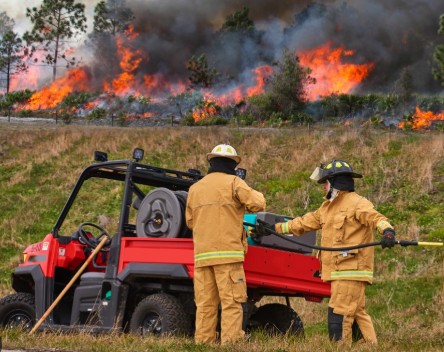
Wildland fire response depends on a wide range of equipment, and each piece plays a distinct role in keeping crews safe and effective. Departments preparing for fire season often find themselves weighing many types of gear, from what firefighters wear to the vehicles that carry them into remote terrain.
Understanding what each category of equipment does and why it matters can help departments make informed decisions. This article walks through the major categories of wildland fire response equipment and what to know about acquiring them.
Personal Protective Equipment
Personal protective equipment, often referred to as PPE, forms the first line of defense for wildland firefighters working in unpredictable conditions.
This includes fire-resistant clothing, helmets, gloves, and eye protection designed to withstand heat and debris. Because wildland environments differ from structural fires, the gear used is built with breathability and mobility in mind, allowing firefighters to move through brush and uneven ground for extended periods.
Departments typically source PPE through specialized safety equipment suppliers who understand the specific demands of wildland conditions.
Hand Tools for Ground Crews
Hand tools remain a fundamental part of wildland firefighting despite advances in vehicle-based technology. Tools allow crews to create fire breaks and remove vegetation that could fuel a spreading fire.
These tools require little maintenance and can be used in areas that vehicles simply cannot reach. Fire equipment suppliers and wildland-specific retailers typically carry a range of hand tools suited to different terrain and crew sizes.
Water Delivery Systems
Water delivery systems are central to suppression efforts, and they come in many configurations depending on the scale of response needed.
Some systems rely on portable pumps and hoses that crews carry into the field, while others are built into vehicles for mobile suppression. The choice of system often depends on the terrain a department typically responds to and the size of the area being protected.
Equipment manufacturers that specialize in wildland applications generally offer water delivery systems as standalone components or as part of a larger vehicle build.
Skid Units and Pump Configurations
Skid units bring water delivery capability to almost any vehicle, offering departments flexibility beyond dedicated fire apparatus. These units are built to fit onto trucks, side-by-sides, and all-terrain vehicles, giving departments the ability to reach areas a full-size engine cannot access.
A skid unit typically includes a tank, pump, and hose reel, configured based on the vehicle it will sit on and the type of response expected. Custom skid unit builders work directly with departments to match the unit to their existing fleet and operational needs.
Initial Attack Trucks
Initial attack trucks serve as one of the most versatile pieces of equipment in a department’s response toolkit.
These vehicles are built to reach a fire quickly, often before it grows into something requiring a larger response, and they typically carry water tanks, pumps, and storage for additional gear. Because initial attack trucks combine mobility with suppression capability, they are frequently used as a first response option in areas with limited road access. Departments looking to acquire an initial attack truck can work with builders, like Kickashskid, that specialize in customizing these vehicles to match specific terrain, budget, and storage requirements.
Communication Gear
Clear communication can determine how quickly a wildland fire response comes together and how safely it unfolds. Radios remain the primary tool for coordination between ground crews, vehicle operators, and incident command. Many departments also rely on repeater systems to extend radio range in areas with difficult terrain or limited signal coverage.
Public safety communication equipment providers offer radios and related systems designed specifically for the demands of wildland environments.
Off-Road and Utility Vehicles
Beyond dedicated fire trucks, many departments use off-road vehicles like UTVs and ATVs to access areas that larger apparatus cannot reach. These vehicles are often outfitted with smaller skid units, giving them suppression capability while maintaining the agility needed for narrow trails or steep terrain.
They tend to serve a supporting role, working alongside initial attack trucks and ground crews rather than replacing them. Outdoor and utility vehicle dealers, along with specialized outfitters, typically offer these vehicles either as a base model or already equipped for fire response.
Grant Funding and Procurement
Acquiring wildland fire equipment represents a significant commitment for any department, and funding often comes from a mix of local budgets and grant programs.
Programs at the federal and state level exist specifically to help departments obtain protective equipment and response vehicles. Understanding the requirements of these programs can shape what a department is able to acquire and when.
Departments often work closely with equipment suppliers who have experience navigating grant-funded purchases to ensure compatibility between what is available and what is approved.
Maintenance and Equipment Longevity
Wildland fire equipment faces harsh conditions regularly, so understanding what maintenance looks like matters as much as the initial purchase.
Pumps, hoses, and vehicle components all experience wear from repeated exposure to heat, dust, and rough terrain. Departments that plan for ongoing upkeep tend to get more reliable performance from their equipment over time. Many manufacturers and suppliers offer parts and support services to help departments maintain equipment long after the original purchase.
Training and Equipment Familiarity
Owning the right equipment is only part of an effective wildland fire response. Firefighters need to be familiar with how each piece of gear functions under real conditions, from operating a water delivery system to using hand tools efficiently. Training programs, whether run internally or through outside organizations, help crews build confidence with their equipment before it matters most.
This familiarity can shape how quickly and safely a team responds when a fire breaks out.
Interagency and Community Coordination
Wildland fires often cross jurisdictional lines, making coordination between departments and agencies an important part of any response. Shared communication systems and compatible equipment standards can make joint responses smoother when multiple departments arrive at the same incident.
Community awareness also plays a role, as residents in fire-prone areas benefit from understanding what local departments have available. Building these connections ahead of fire season can make a real difference when equipment and personnel from different sources need to work together.
Wildland fire response depends on many types of equipment working together, from the gear firefighters wear to the vehicles that carry them into remote areas.
Each category, whether it is a water delivery system, a set of hand tools, or an initial attack truck, plays a specific role in how a department responds to fire. Knowing what to expect from each type of equipment helps departments plan more effectively and understand where to turn when it comes time to acquire or maintain it.
With the right combination of gear, training, and coordination, departments can build a response toolkit suited to the challenges their communities face.
