

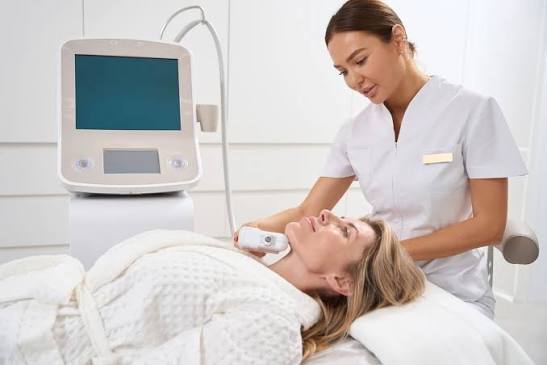
The aging process is inevitable, but that doesn’t mean all the wrinkles, lines, and loosening of the facial skin must be endured without any efforts. Currently, the world of aesthetic medicine provides numerous options, ranging from completely non-invasive energy-based treatments to the whole series of surgical procedures. Today, people discuss two of the most popular options: ultherapy facelift and the traditional surgical facelift.
Knowing the distinction between these two procedures will help you choose the one that is best and most appropriate. Ultherapy facelift is the procedure that involves stimulating collagen production in the deeper layers of skin with the help of energy; on the contrary, surgical facelift means physically moving and lifting up facial skin.
What Is Ultherapy and How Does It Work?
Ultherapy is an FDA-approved, non-invasive method that utilizes the technology of micro-focused ultrasound with visualization (MFU-V) to lift and tighten the skin of the face, chin, neck, and brows. Contrary to skincare products that only target the outer layers of the skin, ultherapy utilizes ultrasound waves that can reach the deep tissues of the skin, particularly the Superficial MusculoAponeurotic System (SMAS) that is targeted by facelift surgery procedures.
As the ultrasound energy reaches the deep layers of the skin, the body’s self-repair mechanism pinpoints specific areas where the heat energy causes injury by generating new collagen and elastin fibers over the next few months. This leads to gradual lifting and tightening of the skin, which takes place gradually over time and will be noticeable to patients starting two to three months after ultherapy skin tightening treatment.
Definition of the Surgical Facelift and Purpose of the Treatment
A surgical facelift, commonly called a rhytidectomy, is a surgical process undertaken by a board-certified plastic surgeon under general anesthesia. Through this surgery, the plastic surgeon makes several cuts at the hairline and near the ears to access and reposition facial muscles and tissues, get rid of the extra skin, and re-drape the remaining skin.
The main purpose of undertaking a surgical facelift is to restore tightness to loose facial skin, minimize deep folds and wrinkles, lift sagging jowls, and correct looseness of the neck skin, among others. The effects will be seen right away and are much more pronounced than those achieved by other methods.
How Do These Two Treatments’ Outcomes Compare?
Undoubtedly, this is the most popular question raised by people trying to choose between these two treatment methods. And here is the straightforward answer: both of them are effective, however, in their own way.
- In the case of an Ultherapy facelift, the patient receives gradual but subtle and totally natural enhancement. Their skin appears rejuvenated and lifted; however, there is no risk of overenhancement. This procedure works great for those who are eager to look younger without having an artificial appearance.
- What concerns surgery facelifts, the procedure offers a radical and immediate effect on saggy jowls and nasolabial folds as well as loose skin around the neck area.
- While Ultherapy outcomes will last for up to a couple of years, with surgical procedures, the patient will have a long-lasting effect for almost a decade.
- When it comes to the choice, it should be said that a surgical facelift would suit those patients who suffer from severe skin laxity.
Are There Any Differences in Terms of Downtime and Recovery?
Yes, this is often the deciding factor for many patients.
The Ultherapy procedure is performed without any need for recovery. It takes up to an hour and a half depending on which part of the face is being targeted. Some patients report slight redness, swelling, or tenderness at the site of application, which can take just a few hours to wear off.
With surgery, a period of recovery is necessary. It includes swelling, bruising, bandages, and a restriction on physical activities for the first couple of weeks. Most patients require anywhere from 4 to 6 weeks to get back into shape enough to go out and mingle again. While the result of surgery is impressive, the patient will have to be ready for recovery as well.
What Does Ultherapy in Dubai Entail?
If you have been thinking about trying out beauty procedures in the United Arab Emirates (UAE), there is no doubt that ultherapy in Dubai has become increasingly popular in recent years. This is because of the highly qualified professionals based in Dubai who perform the procedure using FDA-approved Ulthera devices at top-notch aesthetic centers.
On the other hand, the facelift in Dubai is another cosmetic surgery gaining increasing recognition. Dubai has developed a reputable medical community when it comes to the practice of aesthetic medicine, and therefore, whether you have been thinking of a non-surgical facelift treatment or even a traditional facelift procedure, Dubai provides everything.
Which One Is Better for You? Helpful Tips to Help Make Your Decision
There is no single answer that applies in all cases, and that’s why it’s important to know what to look for. Here are some helpful hints to make the choice process easier:
You should consider an Ultherapy facelift if:
- You experience skin looseness that’s not too severe
- You are interested in results achieved gradually and naturally
- You’d like to have a non-surgical procedure without having to take time off from work afterwards
- You are in your mid-30s to early 50s and need preventative care or intervention on early stages of skin relaxation
- You are contraindicated to undergo surgery
You should go with a surgical facelift if:
- Your skin needs tightening significantly
- You are looking for more lasting effects
- You understand the risks associated with surgery and are ready for a recovery period
- Non-invasive cosmetic procedures didn’t provide you with enough tightening
- You are in good health conditions and have realistic expectations
Choose Facelifts that Fits You
However, it should be noted that each of these treatments has managed to prove itself as an integral part of today’s aesthetic medicine, and each of these treatments is capable of delivering impressive results if it is applied to the right person. The only question that remains is not which option will be more effective for everyone, but which will be more effective for you.
As far as people interested in facelifting in Dubai go, whether the method is going to be surgical or non-surgical, Aesthetic Polyclinic can be considered a reliable medical institution where one can obtain comprehensive information about various options. With the use of advanced technology, the doctors at Aesthetic Polyclinic provide detailed consultations that help patients make decisions with confidence.
FAQs:
1. Is ultherapy painful?
Most patients experience some level of pain that can be tolerated. Numbing cream or analgesics can be administered before treatment to minimize pain.
2. How long do the effects of ultherapy last?
The effects of ultherapy usually last from one to two years, and thereafter one may need to consider maintenance therapy.
3. What is the minimum age for receiving a surgical facelift?
There is no minimum age requirement, but it is recommended that it is a treatment for patients ranging from ages 40 to 60 who have loose skin.
4. Can ultherapy substitute a surgical facelift?
Yes, ultherapy is an option for mild to moderately loose skin conditions, and for highly saggy and wrinkled skin, a surgical facelift would be better suited.
5. How do I know which treatment suits me the best?
Seeking consultation with a dermatologist will give you answers to your questions.
