

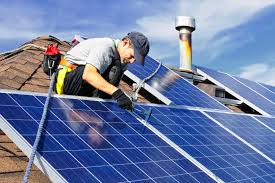
While solar panels can generate electricity from anywhere that there’s sunlight, it’s not a great idea to attach them willy-nilly on your rooftop. In fact, solar installers perform careful surveys of your roof and do numerous calculations to make sure that the panels are installed in just the right place—all so you can get the most power from your panels possible. But what factors impact that ideal location for your panels? Keep reading to find out.
Roof Orientation and Sun Exposure
The direction your roof faces is one of the most important things an installer will look at when choosing the placement for your solar panels. In the northern hemisphere, a south-facing roof usually gets the most consistent sunlight throughout the day, so that’s usually the preferred orientation for solar production. East and west facing roofs can also be a good choice, especially when energy production is needed more in the morning or in the evening.
Roof Angle and Tilt
The slope and pitch of your roof affects how much sunlight your panels get. A tilt of 30 or 40 degrees is best for most places, but installers will adjust the angle of your panels based on your exact latitude and the different paths of the sun throughout the seasons. If the roof pitch isn’t ideal for production, racking systems can be added to help angle the panels for better performance.
Shading and Obstructions
Installers will also analyze which areas of your roof are most often shaded by trees and nearby buildings, as well as any obstructions on the roof like chimneys or vents. Many installers use drone imaging to help map your roof, along with solar pathfinders to evaluate shading patterns throughout the entire year. Even partial shading on one panel can reduce the production of the whole solar array, so minimizing shading on your panels is critical.
Electrical Efficiency
Solar installers will also consider how to set up the panels’ layout to minimize wire runs between panels, as well as from your solar array to the inverter. Reducing the length of the wires used in the system helps to reduce electrical losses. So, if possible, your installer will put the inverter as close to the panels themselves as they can.
Aesthetics
Finally, installers will also take your preferences regarding aesthetics into mind. For example, some homeowners may not want to have their panels on the front slope of their roof, for fear of it negatively impacting their home’s curb appeal. So, if you have any concerns about the look of your panels after installation, be sure to discuss the issue with your installer.
By carefully evaluating all of these elements, your installers can recommend the best placement for your Mission Solar Energy solar modules in order to maximize energy output.
