


Cannabis has become one of the most discussed topics in Europe’s evolving cultural and social landscape. From the famous coffee shops of Amsterdam to Germany’s recent cannabis reforms and Spain’s distinctive social club culture, attitudes toward cannabis are changing across the continent.
While Europe does not have a unified approach to cannabis legislation, several countries have introduced new policies that reflect changing public attitudes, ongoing political debates, and different approaches to personal freedom and public health.
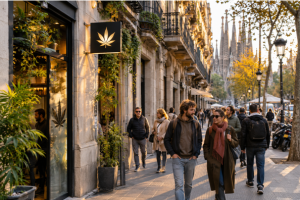
Different Approaches to Cannabis Across Europe
Cannabis legislation varies considerably from one European country to another. Although recreational cannabis remains prohibited in most EU member states, some governments have introduced more flexible regulations.
Germany represents one of the most significant recent developments. Since February 2024, adults have been allowed to possess limited quantities of cannabis, grow a small number of plants at home, and participate in non-commercial cultivation associations under specific conditions.
Malta introduced its own reform earlier, allowing limited personal cultivation and establishing a framework for non-profit cannabis associations. Luxembourg has also permitted limited home cultivation and private consumption.
The Netherlands follows a different model. Its coffee shop system has existed for decades, allowing the tolerated sale of small quantities of cannabis under strict conditions. However, cannabis production and supply remain subject to significant legal restrictions, although the country is currently experimenting with regulated supply chains.
These examples demonstrate that cannabis policy in Europe is not following a single direction. Each country is developing its own approach, balancing individual freedoms, public health, and regulatory oversight.
From Amsterdam Coffee Shops to Cannabis Social Clubs
When people think about cannabis culture in Europe, Amsterdam is often the first destination that comes to mind. Its coffee shops have become internationally recognised, attracting visitors interested in experiencing a different approach to cannabis consumption.
However, another model has developed in parts of Southern Europe: cannabis social clubs.
Unlike traditional commercial establishments, these associations generally operate as private, members-only communities. Their stated purpose is to provide a collective environment for adult members rather than function as ordinary retail businesses.
Spain has become particularly associated with this model. Cities such as Barcelona have developed a visible cannabis social club scene, with associations operating under different organisational structures and membership policies.
Spain: A Distinctive Cannabis Social Club Culture
Spain occupies an interesting position in the European cannabis discussion.
Personal cannabis consumption in private spaces is treated differently from public consumption, which can result in administrative penalties. At the same time, the legal framework surrounding cannabis associations remains complicated.
Cannabis social clubs are typically organised around private membership. They are not ordinary businesses that can openly sell cannabis to anyone who walks through the door.
Barcelona, Valencia, Madrid, Alicante, and Malaga are among the Spanish cities where cannabis social clubs have attracted attention from both local residents and international visitors.
For adults interested in learning about this scene, finding reliable local information is an important first step. For readers interested in exploring Barcelona’s local cannabis scene, Barcelona Weed Map offers a resource for discovering cannabis-related locations in the city.
However, an online listing does not guarantee that a club is currently accepting members or that access is available to visitors. Each association has its own admission requirements, and applicable local laws should always be checked in advance.
Cannabis Tourism and the Importance of Local Information
Cannabis tourism has become an increasingly visible subject in discussions about European travel and lifestyle trends.
For some visitors, cannabis-related attractions are part of a broader interest in local culture, nightlife, and alternative social experiences. Others are simply curious about how different countries approach cannabis regulation.
Nevertheless, travelling between European countries requires particular care. Rules that apply in one destination may be completely different in another.
For example, the Dutch coffee shop system should not be confused with Spain’s private association model. Similarly, Germany’s cultivation associations operate under specific membership and residency requirements.
Visitors should also remember that taking cannabis across international borders is not permitted simply because possession may be allowed in their destination country.
Reliable information about local regulations, membership conditions, and public consumption restrictions can help travellers avoid misunderstandings and potentially serious legal problems.
What Does the Future Hold for Cannabis Culture in Europe?
European cannabis policy is still evolving. Germany’s reforms, Malta’s regulatory framework, and the Netherlands’ controlled supply experiment are examples of different approaches being tested across the continent.
Public health, consumer protection, illegal markets, and youth access remain important considerations in these discussions.
It is also likely that cannabis-related tourism and private social communities will continue to attract attention as more people become interested in understanding the differences between national regulations.
However, greater public awareness does not necessarily mean that cannabis is becoming legal everywhere. In many European countries, recreational possession, supply, and consumption remain subject to strict restrictions.
Ultimately, Europe’s cannabis landscape is becoming more diverse rather than uniform. Understanding local laws and respecting the rules of each destination will remain essential for anyone interested in this evolving part of European culture.
