

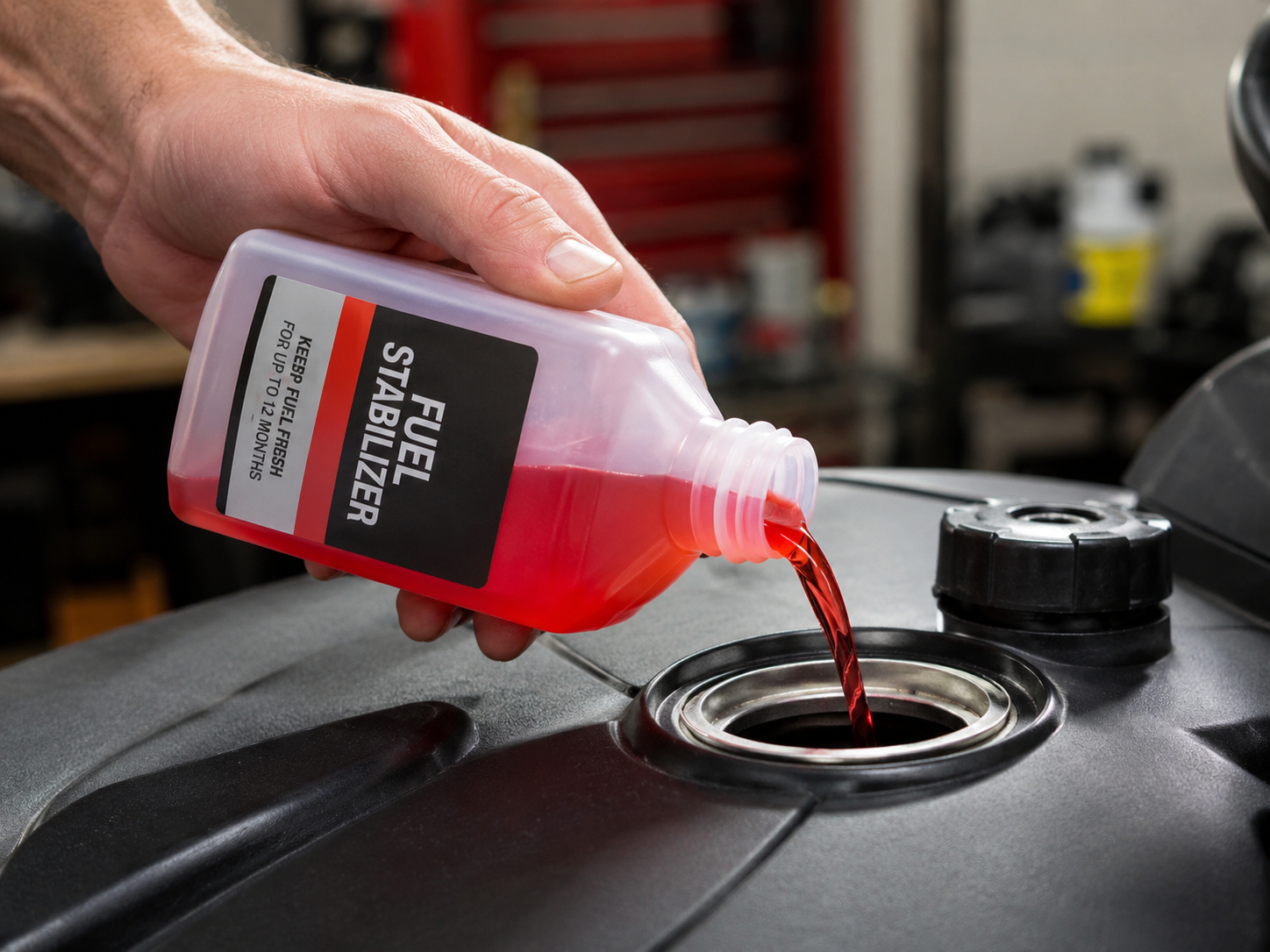
Key Takeaways
Fuel stabilizers are essential for preventing fuel from oxidizing and degrading. This dramatically enhances engine longevity while reducing the chances of incurring costly repairs.
By utilizing fuel stabilizers, ignition performance improves, resulting in enhanced engine efficiency. This leads to a smoother operation and boosts overall reliability.
Implementing proper fuel storage techniques, including the use of stabilizers, can extend fuel’s usable shelf life. This is particularly important for seasonal equipment and helps in avoiding unnecessary expenses.
Fuel stabilizers combat degradation with antioxidants that inhibit oxidation, ensuring that engine performance metrics remain optimal.
To achieve the best results, fuel stabilizers should be applied before seasonal storage, which helps trap moisture and curb oxidation. This ensures equipment functions smoothly when it’s pulled out of storage.
Quality fuel stabilizers are formulated with various ingredients, such as antioxidants, corrosion inhibitors, and enzymes, which all work together to enhance performance and safeguard engine components.
Brands like Stabil, Sea Foam, and Star Tron have established reputations for their effectiveness and dependability in fuel stabilization.
Maximizing Your Investment: Benefits of Fuel Stabilizers
What Fuel Stabilizers Do for Engine Longevity
Achieving engine longevity is crucial for any motorist or equipment owner, and fuel stabilizers are pivotal in this effort. These specialized products inhibit fuel oxidation and degradation over time. Many vehicle owners end up facing issues related to fuel that has lost its integrity, leading to engine problems and costly repairs. Fortunately, using a fuel stabilizer can alleviate these difficulties, ensuring the engine operates smoothly and enjoys a longer lifespan.
Moreover, there’s an undeniable factor of time invested in engine operation. After all, no one wants to deal with an engine that stutters and sputters due to outdated fuel. By adding fuel stabilizers into regular maintenance routines, clients commonly notice significant enhancements in starting performance and overall engine efficiency. Effective fuel management translates to greater reliability.
- Boosts ignition performance.
- Minimizes deposits that lead to clogged fuel systems.
- Improves fuel efficiency and enhances power delivery.
How to Save Money with Proper Fuel Storage
Fuel storage practices are directly linked to the cost-effectiveness of fuel management. Professionals strongly suggest utilizing fuel stabilizers to save money over time. By stabilizing fuel, consumers can markedly extend its usable shelf life, which is crucial for those with seasonal equipment or vehicles stored for long durations. Stale fuel often results in expensive repairs, wasted time, and financial strain.
It’s evident that using stabilizers can be the deciding factor between a well-operating engine and an unexpected repair visit. To optimize outcomes, experts generally recommend the following approaches:
- Store fuel in a cool, dark location.
- Select high-quality containers that minimize air exposure.
- When possible, choose high-octane or ethanol-free fuel.
Implementing these strategies helps maintain fuel freshness, thereby minimizing unnecessary finances later. Plus, by using fuel stabilizers, a smoothly operating engine brings peace of mind and safeguards against unforeseen failures.
The Science Behind Fuel Stabilization
How Fuel Stabilizers Prevent Oxidation and Degradation
Fuel is a complex chemical mixture that can easily experience oxidation and degradation. Professionals have demonstrated that these processes lead to fuel breakdown, causing varnish and other detrimental deposits. Fuel stabilizers are crafted specifically to counteract these adverse chemical phenomena. They effectively adjust the reaction dynamics within the fuel, significantly hindering those unwanted transformations. This alteration enables fuel to retain its quality over an extended period.
Think about the potential repercussions of neglecting this concern. Fuel degradation could lead to clogged injectors, inefficient combustion, and even engine failure. Fortunately, it’s exciting to consider how stabilizers can help preserve that premium quality.
Fuel stabilizers act as essential guardians of fuel integrity. With antioxidant compounds that react with radicals, they neutralize the agents driving oxidation. This scientific approach translates into tangible benefits for engine performance and protection.
- Prevents the development of gum and varnish.
- Extends the effective life of stored fuel.
- Presents a cleaner and more efficient engine.
The Chemistry of Keeping Fuel Fresh
The chemistry behind fuel stabilization might seem daunting, but grasping the fundamentals reveals an intriguing story. By incorporating enzymes and surfactants, these products specifically target compounds responsible for fuel degradation. This complexity highlights the importance of selecting the right stabilizer, as not all options are equal.
Consider how surface tension can hinder a fuel’s capacity to maintain a vapor phase. Fuel stabilizers work to break this surface tension, resulting in a more efficient burn during combustion. The outcome? Better performance metrics and efficient energy utilization, leading to reduced emissions.
“Choosing the right fuel stabilizer could extend fuel life for months, even during storage.”
This insight illustrates just how vital these additives can be for the sustained health of engines over time.
Practical Applications: When and How to Use Fuel Stabilizers
Best Practices for Seasonal Equipment Storage
Many individuals face the common scenario of seasonal equipment storage. Machines like lawnmowers, generators, or boats often get stowed away with the assumption that their fuel durability remains intact. However, here’s the reality: it doesn’t last. Therefore, incorporating fuel stabilizers becomes an essential part of the storage routine.
Experts typically recommend adding stabilizers before equipment goes into off-season storage. The additive combats moisture and stalls oxidation—two main causes of fuel degradation. Sticking to these practices can lead to a smoother experience when it’s time to use the equipment again:
- Fill the tank to reduce air space.
- Introduce the correct amount of fuel stabilizer as per manufacturer guidelines.
- Run the engine for 10-15 minutes to evenly distribute the stabilizer.
- Examine the fuel system before starting after storage.
Following these steps not only shields the engine but also enhances user satisfaction when it’s finally time to fire it up again.
Applying Fuel Stabilizers Across Various Engines
Understanding how to utilize fuel stabilizers for different engines is crucial for achieving peak performance. They cater to a variety of motor types—from small two-stroke engines found in chainsaws to larger four-stroke engines typical in vehicles, each needing tailored stabilizer applications.
Different circumstances call for unique approaches. For example, marine engines can particularly benefit from stabilizers designed to combat moisture. Meanwhile, lawn equipment requires a focus on preventing varnish build-up. Here are key considerations:
- For marine engines, choose a water-dispersing stabilizer.
- For lawnmowers, confirm the stabilizer is compatible with ethanol-blended fuels.
- For vintage cars, long-lasting stabilizers become essential for keeping fuel fresh over years.
These details matter greatly, directly influencing engine performance and lifespan. Being conscious about fuel management reflects a genuine understanding of engine care.
Expert Recommendations: Choosing the Right Fuel Stabilizer
Key Ingredients to Look for in Quality Products
Selecting the right fuel stabilizer goes beyond simply picking out the first brand in sight. Professionals advise taking a good look at product labels. This scrutiny is crucial. Certain ingredients can notably enhance the effectiveness of stabilizers.
Seek stabilizers that feature the following:
- Antioxidants: These help inhibit fuel oxidation.
- Corrosion Inhibitors: Vital for safeguarding against rusty components.
- Enzymes: Aid in breaking down moisture and other contaminants.
The presence of these ingredients reflects the science behind effective fuel stabilization. It’s all about equipping equipment owners with the right resources to protect their investments.
Top Brands That Experts Trust in the Industry
Brand loyalty often plays a significant role in the choice of fuel stabilizers. Many professionals endorse specific names in the industry. Despite continuous innovation bringing new products to market, a few brands consistently withstand the test of time. Notable names include:
- Stabil: Renowned for their quality, long-lasting stabilization solutions.
- Sea Foam: A go-to among boaters for its exceptional moisture-fighting properties.
- Star Tron: Highly regarded for its effectiveness in ethanol-rich fuels.
This selection illustrates how brand integrity can often correlate with reliable performance and the well-being of engines over time. Consulting with industry experts tends to yield valuable insights regarding product choices.
In the fast-paced world of fuel management, remaining informed and making thoughtful selections proves vital for both homeowners and business owners alike.
FAQ
Can fuel stabilizers be used after fuel has already begun to degrade?
Utilizing a fuel stabilizer after signs of fuel degradation appear is not as effective as preventative measures. While it might slow further deterioration, reversing existing damage is unlikely. The best approach has always been to stabilize fuel before any aging signs emerge.
How long can fuel remain stable with stabilizers added?
When applied according to guidelines from manufacturers, fuel stabilizers can keep fuel fresh for as long as 24 months. The exact duration hinges on factors such as the fuel type and storage conditions, but these products generally act as a safeguard against lengthy storage durations.
Are fuel stabilizers necessary for all types of engines?
Not every engine requires fuel stabilizers, but they can be extremely beneficial for those left idle for long periods. Seasonal equipment like lawnmowers or boats, along with classic vehicles, often see improved performance with the protection that fuel stabilizers offer. Overlooking them could lead to expensive repairs.
Do fuel stabilizers affect engine performance immediately?
Fuel stabilizers don’t typically provide immediate performance gains but contribute to enhanced efficiency over time. Their role is to ensure cleaner fuel delivery and improved combustion, which ultimately bolsters overall engine performance and longevity.
What are the signs that fuel in a storage tank has gone bad?
Signs of stale fuel include a yellowish hue, an off-putting odor, and the presence of sediment or cloudiness in the tank. These indicators suggest that fuel degradation has started, which could lead to engine performance complications and expensive repairs.
Can too much fuel stabilizer be a problem?
Yes, using more than the recommended dosage can lead to engine performance issues, such as rough idling or misfires. Following the manufacturer’s guidance for the appropriate amount is essential for optimal outcomes without negative effects.
Is it possible for fuel stabilizers to work in ethanol-blended fuels?
Absolutely! Many fuel stabilizers are specifically designed to tackle the challenges posed by ethanol, including moisture absorption and phase separation. By utilizing a high-quality stabilizer formulated for ethanol-blended fuels, performance remains strong and stable.
How often should fuel stabilizers be added for stored equipment?
For stored equipment, experts advocate for adding fuel stabilizers every time fresh fuel is introduced, especially before long-term storage. Consistent application safeguards fuel integrity and ensures reliable performance when the equipment is needed next.
Useful Resources
- Matthews International LLC– A resource for insights into fuel storage and management methods.
- Lawn Toolbox– Expert advice on maintaining lawn equipment, including fuel management strategies.
- National Fisherman– A resource for marine equipment care and fuel stabilization techniques.
- Engineering Toolbox– Provides scientific principles and calculations relevant to fuel chemistry and engine performance.
- The Balance– Offers financial insights related to cost-effectiveness in equipment management, including fuel storage practices.
- AutoZone– A site offering automotive resources, including guidance on fuel maintenance and product recommendations.
- Consumer Reports– Features reviews and recommendations for fuel stabilizers and associated products.
- Car Bibles– An educational platform concentrating on car maintenance and tips for fuel efficiency and stabilization.
- Federal Highway Administration– Offers insights and research regarding fuel management and its impact on transportation.
