

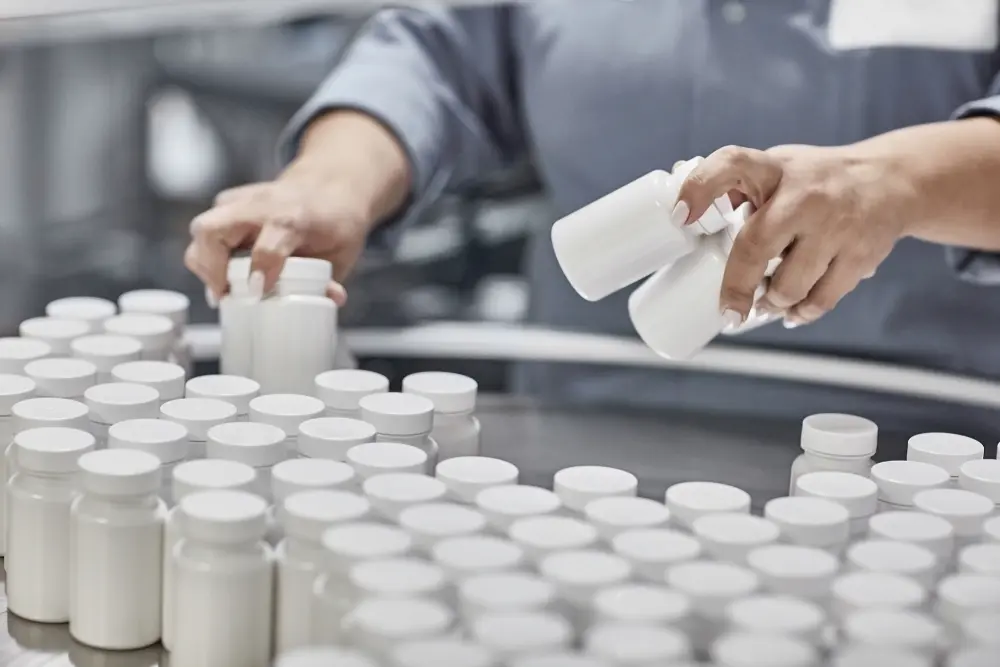
Your business is growing. It’s an exciting time, filled with new orders, expanding product lines, and increasing market reach. But with growth comes complexity, and new operational bottlenecks can quickly emerge. For many businesses scaling up, product labeling is one of the first and most challenging hurdles to overcome.
What worked for your first 100 units—labeling by hand at a workbench—simply won’t work for 10,000. This transition is where professionalism is either solidified or compromised. Your product’s label is often the first interaction a customer has with your brand on a crowded shelf. It communicates quality, builds trust, and drives sales.
Getting it wrong with crooked, bubbled, or inconsistent labels can make even the best product look amateurish. This guide is for you, the operations manager or business owner navigating this critical growth stage. We’ll walk you through the signs that you’ve outgrown your current process, compare your options for scaling, and show you how to choose a labeling solution that supports your business today and tomorrow.
When Manual Labeling Can’t Keep Up: Signs You Need to Scale
That feeling of being overwhelmed by labeling tasks is a sure sign that your process is no longer a fit for your business. When you spend more time peeling and sticking than you do on innovation or sales, it’s time for a change. Here are five common signs that your manual or small-scale labeling process is failing.
- Inconsistency is Hurting Your Brand
- Production is a Bottleneck
- Costs Are Rising Unexpectedly
- You Can’t Keep Up with Demand
This transition is where many businesses turn to expert contract labeling services to eliminate these bottlenecks and ensure professional quality at any scale.
The Crossroads of Growth: In-House Labeling vs. Outsourcing
Once you’ve decided to move beyond manual labeling, you face a critical strategic choice: invest in your own machinery or partner with a specialized service. Each path has significant implications for your capital, operational flexibility, and long-term growth.
The in-house path involves purchasing, operating, and maintaining labeling equipment. This gives you full control but requires significant upfront investment and technical expertise. The outsourcing path means partnering with a third-party specialist who manages the entire labeling process for you, offering expertise and scalability on demand.
| Feature | In-House Labeling (Buying Equipment) | Outsourcing (Contract Labeling Service) |
|---|---|---|
| Initial Cost | High (significant capital investment) | Low to none (no equipment purchase) |
| Scalability | Limited by machine capacity | Highly flexible (from small runs to mass production) |
| Expertise Required | High (machine operation, maintenance, compliance) | None (leverages partner’s expertise) |
| Hidden Costs | Maintenance, downtime, operator labor, materials | None (included in service fee) |
| Best For | Businesses with predictable, high-volume needs | Businesses with fluctuating demand or diverse products |
Option 1: The In-House Machinery Path
Investing in your own equipment can be a viable option if you have high, predictable volume for a small number of products. The machinery itself scales in complexity and cost:
- Manual/Hand-held Applicators: These are a step up from bare hands, helping dispense and apply labels more consistently. They are best for startups or prototype runs.
- Semi-Automatic Machines: These systems require an operator to place each container, but the machine handles the label application. They are a good middle ground for small-to-medium batches.
- Fully Automatic In-Line Systems: These are the gold standard for mass production. They integrate directly into a conveyor line and apply labels at high speeds with minimal human intervention.
This path requires more than just money for the machine. You also need dedicated floor space, trained operators, a maintenance budget, and a plan for inevitable downtime.
Option 2: The Contract Labeling Service Path
For most growing businesses, partnering with a contract labeling service offers a smarter, more flexible path. This model acts as a “one-stop-shop” where an expert partner manages everything from sourcing and printing labels to precise, high-speed application.
The immediate benefit is clear: you gain access to state-of-the-art, fully automatic machinery without the massive capital expense. A good partner has the technology to handle any container—bottles, jars, tubes, or boxes—and the flexibility to run a small batch for a market test one week and a massive production run the next. This allows you to scale seamlessly, paying only for what you need, when you need it.
Choosing the Right Label for Your Product and Brand
The way a label is applied is only half the story. The type of label you choose is just as critical, impacting your product’s shelf appeal, durability, and overall brand perception. An expert partner can guide you through these choices, but understanding the basics is essential.
Pressure-Sensitive Labels. Also known as self-adhesive labels, these are the most common and versatile option. They can be printed on a wide variety of materials (paper, film, foil) with high-quality graphics and finishes. They adhere to nearly any surface, making them perfect for bottles, jars, boxes, and other standard packaging.
Shrink Sleeve Labeling. Shrink sleeves are printed labels that slide over a container and then shrink to fit its exact shape when heat is applied. This method provides stunning 360-degree branding that makes products pop on the shelf. It’s an ideal choice for uniquely shaped containers and maximizing visual real estate. Given that 81% of shoppers have tried a new product simply because its packaging caught their eye, the visual impact of a shrink sleeve can be a powerful sales tool.
Thermal Transfer & Direct Thermal. These methods are less about branding and more about information. They are highly durable and cost-effective for printing variable data like barcodes, expiration dates, and lot numbers. Thermal transfer uses a ribbon for a long-lasting print, while direct thermal uses heat-sensitive paper, ideal for shipping labels and receipts.
The Strategic Advantages of a Scalable Labeling Partner
Choosing to outsource your labeling is more than just a cost-saving measure; it’s a strategic move that positions your business for sustainable growth. Here are the core advantages of working with a professional labeling partner.
- Maintain Flawless Brand Consistency.
- Achieve Cost-Efficiency
- Gain Unmatched Flexibility
- Free Up Your Team to Focus on Growth.
Ensuring Compliance and Quality Across Specialized Industries
For many businesses, a label isn’t just a marketing tool—it’s a legal requirement. Industries like cannabis, alcoholic beverages, pharmaceuticals, and food and beverage are governed by strict regulations that dictate what information must be displayed and how.
Failing to comply with these rules can lead to hefty fines, forced recalls, and serious damage to your brand’s reputation. An experienced contract labeling partner understands the nuances of these regulations. They stay up-to-date on changing requirements from agencies like the FDA and TTB, ensuring your products remain fully compliant.
Working with an expert who knows your industry mitigates this risk entirely. They can manage everything from lot code tracking to ensuring font sizes meet legal standards, giving you the peace of mind to focus on your business.
Conclusion: Label Your Products for Today and Tomorrow
The journey from hand-labeling in a garage to stocking shelves nationwide is a testament to your hard work and the quality of your product. But the processes that got you here won’t be the ones that take you to the next level. Choosing the right labeling strategy isn’t just an operational detail; it’s a fundamental component of successful growth.
As we’ve seen, the struggles of manual labeling—inconsistency, bottlenecks, and hidden costs—are clear signs that it’s time to scale. While investing in in-house machinery has its place for high-volume, predictable operations, partnering with a flexible and expert labeling service offers a powerful path forward without the risk and overhead.
By choosing a solution that grows with you, you can focus on building your brand, confident that your packaging will always look as professional as the product inside.
