

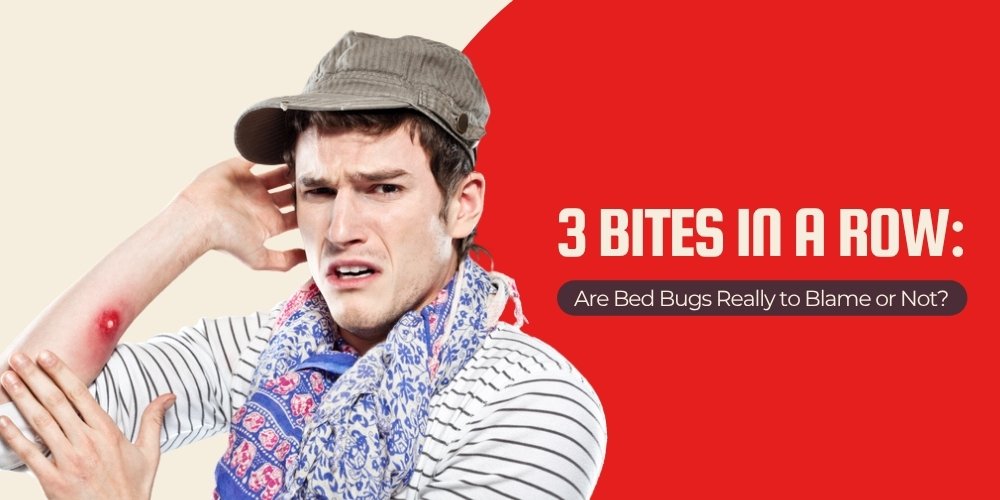
Ever had a restless night only to find fresh bites on your skin the next morning? Many homeowners immediately link 3 bites in a row to bed bugs, but the truth is more complicated. While it can be a warning sign, there are plenty of other explanations you might not expect. Keep reading to learn how to tell the difference and take the proper steps forward.
What Does “3 Bites in a Row” Really Mean?
The phrase 3 bites in a row commonly refers to bed bug activity. This pattern has become common for people to suspect an infestation, even though it is not always a reliable indicator. The following points show why homeowners sometimes call it the ‘breakfast, lunch, and dinner’ sign:
- Feeding behavior: Bed bugs may bite several times while searching for a blood vessel.
- Linear appearance: The bites often appear on exposed skin in a row or small clusters.
- Common nickname: Because of this pattern, homeowners frequently refer to the bites as consecutive meals.
However, it is essential to note that not every set of three marks comes from bed bugs. These are other possible causes:
- Other insects: Mosquitoes, fleas, and ants may leave similar marks.
- Skin reactions: Allergies, rashes, or irritants can create clusters that resemble bites.
Common Bite Look-Alikes and Misconceptions
Mistaking skin reactions for bed bug bites often leads to confusion and unnecessary treatments. The following examples highlight common conditions that can appear similar to infestations:
- Mosquito bites: Typically, they are itchy and raised. They appear randomly rather than in a defined pattern.
- Flea bites: Small red marks that concentrate on ankles or legs, sometimes grouped closely together.
- Skin allergies: Reactions to detergents, fabrics, or soaps may form clusters that look like insect bites.
Since these reactions can appear similar, it is easy to draw the wrong conclusion. These are misconceptions to avoid:
- Assuming all rashes mean bed bugs: Clusters alone are unreliable proof of an infestation.
- Relying on the “three in a row” pattern: This common belief oversimplifies symptoms and can mislead homeowners.
- Jumping to immediate treatment: Scheduling bed bug heat treatment without proper inspection often results in unnecessary costs and stress.
Confirming Bed Bug Activity at Home
Identifying clear evidence is the first step before choosing a treatment method. The following signs often confirm bed bug activity:
- Blood spots on bedding: Small stains on sheets or pillowcases may result from crushed bugs after feeding.
- Shed skins and eggshells: Light casings and tiny white shells often appear near mattress seams or furniture joints.
- Live bugs near sleeping areas: Careful inspection of mattresses, headboards, and baseboards may reveal adult bed bugs.
Once these signs are present, deciding on the next steps is essential. The following are situations when professional help becomes necessary:
- Uncertainty about early signs: Inspectors can confirm whether bed bugs cause marks or stains.
- Ongoing symptoms: Bites or stains that return despite cleaning may indicate an active infestation.
- Reliable treatment options: Once an infestation becomes evident, a bed bug heat treatment ensures a proven solution. It reaches lethal temperatures that kill pests in all life stages.
Why Professional Treatment Beats DIY Solutions
Choosing the proper treatment for a bed bug infestation is significant in achieving effective results. The following points explain why do-it-yourself approaches rarely provide complete results:
- Sprays and powders: Over-the-counter products only kill on contact and fail to reach deep hiding areas.
- Ineffective home remedies: Common tactics like essential oils or vinegar may offer temporary relief, but do not eliminate eggs or colonies.
- Incomplete treatment: It often drives bugs into new rooms, making the infestation more difficult to manage.
On the other hand, professionals use bed bug heat treatment, which remains the most effective long-term approach:
- Thorough penetration: Heat reaches cracks, crevices, and furniture joints where sprays cannot.
- All life stages eliminated: High temperatures destroy eggs, nymphs, and adults in a single session.
- Proven long-term success: By addressing hidden areas, heat treatment reduces the risk of recurrence and lowers the need for repeat visits.
Stop Guessing, Start Acting!
Not every case of 3 bites in a row points to a bed bug, but ignoring the signs can become a bigger issue. The smart move is to focus on accurate identification and proven solutions rather than relying on myths. If you want peace of mind and lasting protection, contact professionals who can determine if bed bugs cause three bites in a row and provide effective bed bug heat treatment when needed.
