
The workplace has shifted more in the past five years than it did in the last few decades. With hybrid models, remote-first teams, and digital tools becoming the backbone of how work happens, companies are learning to adapt, and fast. But with this new level of flexibility comes a fair share of challenges. One of the biggest? Understanding what’s actually going on during the workday.
That’s where software for monitoring employees comes in. It’s not about spying or micromanaging. It’s about gaining insight, quietly, ethically, and efficiently. When used with intention, this kind of software can become a behind-the-scenes tool that helps businesses thrive and employees stay on track.
So, What Is It Really?
Imagine you’re running a team scattered across three time zones. You’ve got one person working from home, another traveling, and a few in-office. You can’t exactly swing by their desks to check in. That’s where this software steps in.
It keeps tabs on how time is spent, what apps people are using, what tasks they’re tackling, where the productivity spikes or dips. It’s not about micromanaging every click. It’s about seeing patterns. What’s working? What’s not. And where support might be needed. That’s the heart of it. Visibility, not surveillance.
The Real-World Tools That Make It Work
Let’s talk about features, not the kind that sound cool but never get used. The ones that actually make a difference.
Time tracking, for starters, is gold. It helps teams and managers get a realistic sense of how long things take, which can seriously change how projects are planned. Then there’s screen activity snapshots, which, despite sounding invasive, are mostly used to confirm if someone’s stuck or needs help.
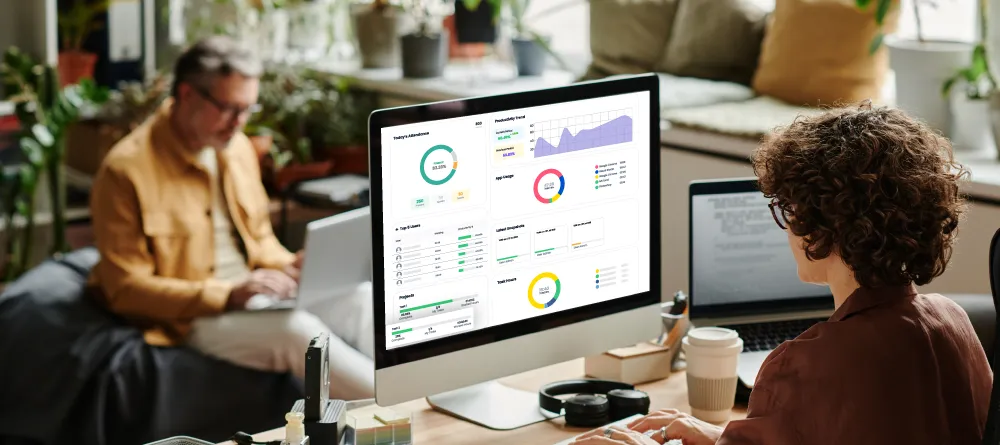
Activity logs show which apps and websites were used, but not in a tattletale way. More like: “Hey, we’re using six different tools to do one job, maybe we should clean that up.” And reporting dashboards? That’s where all the data gets turned into something useful, like insights that lead to better workflow or less burnout.
What’s in It for Employees?
Let’s flip the script for a second. This isn’t just about management keeping tabs, it’s about helping people do their jobs better.
Ever been in a situation where you know you’re working hard, but it’s hard to prove it? Monitoring tools can back you up. They create a record of your workday that speaks for itself. That can be huge when it comes to performance reviews or asking for a raise.
And let’s not forget: clarity helps everyone. When expectations are clear and performance is measured fairly, stress goes down and teamwork gets stronger. No guesswork. No drama. Just the facts.
The Privacy Conversation (Because It Matters)
Let’s be honest: no one wants to feel like they’re being watched all the time. And they shouldn’t. Respecting privacy isn’t just about compliance, it’s about trust.
Good employee monitoring software is upfront about what it tracks and why. Employees should know exactly what’s being monitored, what’s not, and how the data is being used. Anything less is a recipe for resentment.
And yes, companies need to follow data protection laws like GDPR or CCPA. But more than that, they need to approach this with empathy. If people feel respected, they’re more likely to buy into the system.
Where It’s Actually Being Used
A creative agency might use it to keep project timelines realistic. A startup might use it to spot growing pains early. A healthcare company might lean on it to stay HIPAA-compliant. Even nonprofits are getting in on the action, making sure their limited resources are going toward mission-critical work.
It’s not about size or industry. It’s about recognizing where time, energy, and data are going, and making sure it’s all being used wisely.
Picking the Right Employee Monitoring Tool
Now, not all tools are created equal. Some are loaded with features that sound fancy but just collect digital dust. Others are intuitive, clean, and actually helpful.
If you’re thinking about adopting one, ask yourself a few things: Is it easy to use? Will it grow with your team? Does it play nicely with other apps you rely on? And maybe most importantly, will your team be comfortable with it? The right employee monitoring tool should feel like a boost, not a burden.
Getting It Off the Ground
Rolling out new software can go sideways fast if you skip the people part. Start with a real conversation. Explain the “why” behind the change, not just the “what.” Invite feedback. Address concerns. Be honest.
If it helps, pilot it with one team before scaling it out. Tweak as you go. The more inclusive the rollout, the smoother it’ll be. And remember: how you introduce it will shape how people feel about it.
Where This Is All Headed
Technology never sits still, and employee monitoring software is no exception.
We’re seeing more tools infused with AI, helping spot burnout risk before it hits, or flagging unusual behavior that could hint at security issues. Speaking of security, data loss prevention solutions are being built right into these platforms, adding another layer of protection for sensitive company info.
But beyond the tech, there’s a shift happening in how we think about work. Monitoring is becoming less about control and more about clarity, well-being, and support. And that’s a shift worth paying attention to.
Wrapping It Up
Software for monitoring employees isn’t about control. It’s about connection. Clarity. And yes, productivity. But in a way that’s fair, thoughtful, and forward-thinking.
When done right, it helps teams focus on what matters. It makes sure great work gets noticed. And it protects both people and data in a world that’s more digital than ever.
