

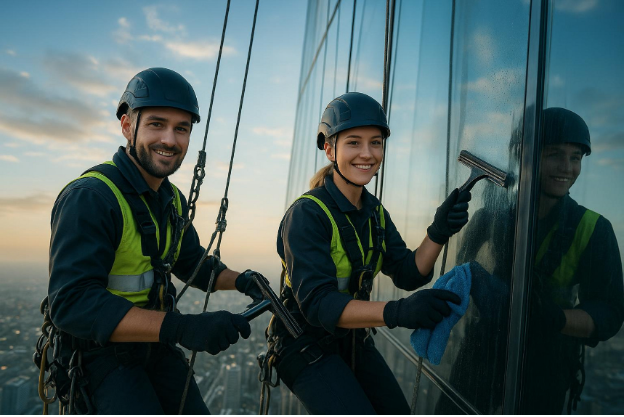
Modern buildings often use lots of glass and steel, and many windows sit high above the ground. Keeping them clean can be difficult. So, how does rope access keep window cleaning safe and efficient?
Put simply, trained technicians work while supported by ropes and safety gear, so they can clean hard-to-reach windows on tall or awkward buildings. This method gives excellent access without the large equipment used in many traditional options.
If you’re looking for expert rope access contractors, it helps to know how rope access works so you can keep your building looking good and in good condition.
What Is Rope Access Window Cleaning?
Rope access window cleaning is a proven method that grew out of techniques used in rock climbing and caving. Trained workers use ropes, harnesses, and safety systems to move along the outside of buildings and reach windows and facades that are difficult to reach in other ways.
Because they can move freely, they can work around unusual building shapes and clean with a high level of control.
How Rope Access Differs from Traditional Window Cleaning Methods
Traditional window cleaning often uses scaffolding, mobile elevated work platforms (MEWPs), or ladders and water-fed poles for lower areas. These options can work well in the right situation, but they often bring problems.
- Scaffolding can be costly, takes time to build and remove, blocks views, and can look unattractive.
- MEWPs (such as boom lifts) need space on the ground and can be hard to place in busy city streets.
- Water-fed poles are useful, but they are usually limited to lower floors or windows that can be reached from the ground.
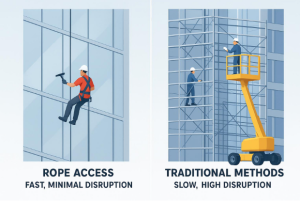
Rope access removes the need for large structures and machines. Instead, technicians descend and move along the building using ropes, carrying light tools with them. This means faster setup, less disturbance for people inside and around the building, and the ability to reach almost any part of the exterior, even if the building is tall or oddly shaped. It is a clean, efficient option that keeps disruption low.
Where Rope Access Is Used for Window Cleaning
Rope access window cleaning is a strong fit for tall buildings, skyscrapers, and buildings with features that make other access methods difficult. Curved glass towers, deep set windows, and sections that stick out from the main structure are common examples. It is also useful for smaller buildings when only a small area needs work and scaffolding would be unnecessary. For offices, residential blocks, and strata buildings, rope access can be a practical way to keep the outside looking clean and well maintained.
What Equipment Is Required for Safe Rope Access Window Cleaning?
Rope access window cleaning depends on the right equipment and its condition. It is not just ropes and a bucket. It is a complete safety system, where each item has a clear job. Equipment checks are part of normal daily practice, and every item must be inspected before use.
Ropes, Harnesses, and Personal Protective Gear
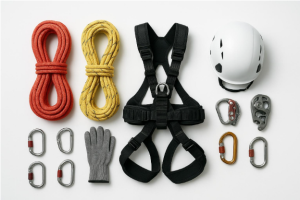
The main parts of a rope access system are usually two separate ropes: a working rope and a backup safety rope. Both are rated to hold the technician’s weight. A harness supports the worker and provides secure attachment points for devices and tools.
Personal protective equipment (PPE) also matters: a helmet helps protect from knocks and falling objects, gloves protect hands from rope friction and weather, and suitable footwear helps grip on slippery or wet surfaces. Equipment is selected for strength, long service life, and comfort during long periods working at height.
Anchor Points and Safety Devices
Anchor points are what the ropes connect to. They are fixed points on the building that must be strong and correctly placed. These anchors hold the full system and allow the technician to work safely while suspended.
Rope access also uses a set of safety devices, including descenders for controlled movement down the rope, ascenders (such as Jumar devices) for moving up, and connectors like carabiners and pulleys. Backup devices are also used so that if one part of the system fails, another part can stop a fall.
Cleaning Tools Adapted for Rope Access
Cleaning tools also need to suit work at height. Since technicians must keep their load light, they use compact and effective items such as squeegees, scrubbers, and small buckets. Tools are often attached to the harness to reduce the chance of dropping them.
Water-fed poles are mainly used from the ground, but in some situations they can be used from a suspended position for certain areas. The aim is simple: use light tools that still produce a thorough, streak-free finish.
How Does Rope Access Increase Safety for Window Cleaning?
Safety is the base of rope access work. Working high above the ground means there is no room for shortcuts, so training, checks, and clear procedures are taken seriously. For this reason, rope access is known for having a strong safety record within height-related work.
Training and Certification of Rope Access Technicians
Rope access technicians are not just people who are fine with heights. They complete structured training and certification. Organisations such as the Industrial Rope Access Trade Association (IRATA) and the Society of Professional Rope Access Technicians (SPRAT) set standards for skills and safety. Training covers equipment use, knots, rope movement techniques, rescue methods, and safety rules. Technicians also complete refresher training and regular reviews so their skills stay current. To find qualified professionals, visit https://www.ropeaccessinlondon.co.uk/.
Strict Safety Protocols and Procedures
Before work begins, teams plan the job in detail. This includes Risk Assessments and Method Statements (RAMS) and a site check to spot hazards and decide the safest method. During cleaning, technicians follow clear procedures and often work with a supporting team so help is close by if needed.
Good communication between the technician and the ground team is also important, using radios, hand signals, and agreed steps to keep work organised and safe.
Emergency Preparedness and Rescue Plans
Rope access safety also includes planning for emergencies. Technicians are trained to carry out rescues, not just cleaning and access work. Teams practise rescue drills so they can respond quickly if there is an injury, a medical issue, or an equipment problem. Because the system uses two ropes and backup devices, it also allows for a controlled and quick removal of a worker if plans need to change suddenly.
Comparison of Rope Access Safety Versus Other Methods
Compared with scaffolding or cradle systems, rope access can offer safety advantages. Scaffolding requires assembly and removal, and workers can face risks during these stages. Cradle systems depend on mechanical parts and can be affected by strong winds.
Rope access relies on trained people using systems with backup protection and frequent checks. With strong training standards and careful planning, rope access can reduce the overall chance of falls and injuries for many high-rise window cleaning tasks.
How Rope Access Improves the Efficiency of Window Cleaning
Rope access is also known for speed and practicality. It can help teams complete work faster while still producing a high-quality finish. This is especially useful in busy city areas where space is limited and building downtime is expensive.
Speed of Setup and Completion
Rope access can be set up quickly. Unlike scaffolding, which may take days or weeks to install and remove, a rope access team can often start work much sooner. Faster setup often leads to faster completion, which can reduce labour costs and shorten the time barriers and safety zones are needed around the building. Technicians can move smoothly across the facade and cover large areas efficiently.
Minimal Disruption to Building Operations
Many buildings need to stay open and running during maintenance. Scaffolding can block entrances, reduce light, create noise, and interrupt daily routines. Rope access needs very little space at ground level and does not require large machines on site. Technicians can work quietly and with fewer obstructions, so tenants and visitors are less likely to be affected.
Accessing Challenging or Complex Building Designs
New building designs often include curves, sharp angles, recesses, and overhanging sections. These features can make access difficult for platforms and scaffolding. Rope access technicians can adjust their position and anchor setup to reach these areas. This flexibility helps them clean windows that other methods may not reach, keeping the whole exterior looking consistent from top to bottom.
What Are the Main Benefits of Rope Access Window Cleaning?
Choosing rope access can offer benefits that go beyond clean glass. It can affect cost, building impact, and long-term care, which is why many property managers use it as a main maintenance option.
Cost-Effectiveness Compared to Other Techniques
Rope access is often more cost-effective because it avoids the hire and build costs linked to scaffolding and MEWPs. The shorter setup time can also reduce labour hours. For regular cleaning schedules, these savings can add up over time. Even if anchor points need to be added on some buildings, ongoing work can still be cheaper than repeated scaffold builds or lift hire.
Reduced Environmental and Structural Impact
Rope access usually has a lower impact on the surrounding area. It often uses less heavy equipment and fewer fuel-powered machines, which can mean less noise and fewer emissions. It also reduces the chance of damage to landscaping or the building exterior that can sometimes happen with large access systems. Because the method is light-touch, it can help protect the building’s appearance while meeting sustainability goals.
Consistent High-Quality Results
Rope access lets technicians work close to the glass, which supports consistent results. They can reach windows in awkward locations and clean them properly rather than working from a distance. This can lead to clearer, streak-free windows and a cleaner facade overall. Regular cleaning can also reduce the buildup of grime that may harm materials over time, supporting longer-term exterior care.
What Are Common Challenges and Risks in Rope Access Window Cleaning?
Rope access has many strengths, but it still comes with challenges and risks. These need to be recognised and controlled through training, planning, and good day-to-day working habits.
Weather and Environmental Factors
Weather is one of the biggest challenges. High winds, heavy rain, snow, ice, or extreme heat can make work unsafe or impossible. Wind can cause ropes to move and make accurate work harder. Rain and ice can make surfaces slippery. Because of this, teams check conditions often, and work may be delayed for safety reasons, which can affect schedules.
Potential Risks and How They Are Managed
Working high above the ground can be mentally demanding. Even experienced technicians need strong focus, because mistakes can have serious results. Training supports this by teaching safe habits, clear checks, and calm decision-making under pressure. The work is also physically hard, with awkward positions, pulling on ropes, and long periods in a harness. These issues are managed with fitness standards, suitable equipment, regular breaks, and teamwork where workers support and check each other.
Limitations of Rope Access Methods
Rope access works well for window cleaning and many maintenance jobs, but it has limits. Workers can only carry light equipment, so tasks that need heavy materials may require other access methods. Some older buildings may not have suitable anchor points, so extra planning or installation work may be needed. Also, some unusual building shapes can still be difficult, and they may require detailed planning and advanced rope techniques.
Is Rope Access Right for Your High-Rise Window Cleaning Needs?
Choosing the right method for high-rise window cleaning depends on your building and your priorities. Rope access often provides a strong mix of safety, speed, and cost control, but it should match the site conditions and the level of access required.
Factors to Consider Before Choosing Rope Access
Start with your building’s height and design. If it has curved sections, recesses, or areas that are hard to reach, rope access may be a good fit. Also think about how often cleaning is needed; rope access can work well for regular schedules because setup is quick and disruption is low. Budget matters too. Some sites may need anchor points fitted, but long-term costs can still be lower than repeated scaffold builds or MEWP hire. If you want a method that causes less noise and keeps entrances and walkways clearer, rope access is often a strong option.
Selecting Qualified Rope Access Service Providers
Picking the right company matters for both safety and results. Choose providers linked to recognised bodies like IRATA or SPRAT, as this shows their technicians meet known standards. It can also help to work with a company that employs its own technicians, as this may support better consistency and responsibility than relying heavily on subcontractors.
Ask for examples of similar work, and check references if possible. The provider should also supply clear Risk Assessments and Method Statements (RAMS) and have the right insurance in place, including public liability and professional indemnity cover.
Key Takeaways on Rope Access for Safe and Efficient Window Cleaning
Rope access window cleaning is a modern method that combines strong safety practices with fast, flexible access. As cities grow taller and building designs become more complex, rope access is likely to become even more common. It is also useful for more than window cleaning, including inspections, repairs, and maintenance tasks such as sealing leaks, fixing facade issues, and fitting signs. For many buildings, rope access is a practical long-term option that helps keep exteriors clean, professional-looking, and well cared for.
