

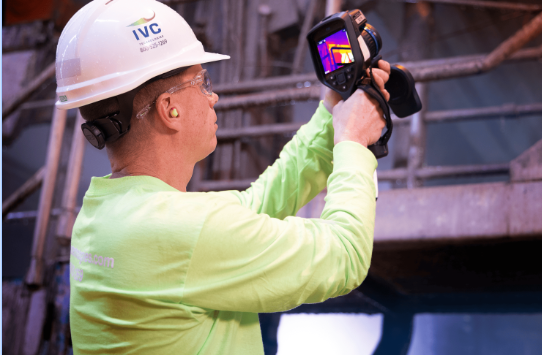
Today’s operations require equipment that can function reliably under stress. Even small problems can snowball into big issues if they are not detected. Infrared (IR) thermography has proven to be an invaluable tool in the field of equipment reliability because it can detect temperature patterns that are not visible to the naked eye, giving users ample warning before a failure happens. Here are five ways in which thermal imaging can improve equipment reliability in an industrial setting:
Early Fault Detection Through Thermal Signatures
All mechanical and electrical devices tend to generate heat during their operation. Changes in friction, an increase in resistance, or deteriorating insulation cause temperature changes. Infrared imaging helps detect these changes without physical contact with the devices. Technicians can thus identify problems with the devices even when in operation. For instance, hot spots in an electrical panel, non-uniform heating in bearings, or unusual cooling in process systems often indicate problems. Identifying problems early minimizes the scope of repairs. In addition, minor deviations can be addressed before they grow into major problems. This approach to maintenance thus replaces the traditional “firefighting” approach with predictive maintenance.
Preventing Downtime by Acting Before Failure
Unscheduled downtime can cause problems in production schedules, budgets, and customer relations. Thermal imaging is an essential tool in ensuring that production is not brought to a halt. In most cases, overheating connections, overloaded circuits, and failing motors can sometimes look normal to the naked eye but will show excessive heat when an infrared survey is carried out. When organizations invest in reliable infrared thermography services that pinpoint these threats, they gain a powerful safeguard against sudden stoppages. Maintenance crews can prioritize interventions based on severity, coordinate repairs during scheduled outages, and avoid emergency shutdowns that halt entire lines. The result is steadier output and improved operational confidence.
Enhancing Safety Across Critical Assets
Equipment failure does not just impact the equipment itself; there are also safety implications for the people working around the equipment. Electrical equipment failure may cause fires, while mechanical failure may cause catastrophic release or other safety issues. Infrared imaging contributes to safety because it reveals hazardous situations remotely, rather than requiring intrusive inspection methods. This means that the safety of the technicians using the technique is not compromised when they are assessing an energized system, a high-temperature process, or an inaccessible area. By preventing thermography-related hazards, organizations minimize the chance of an accident resulting from overheating, fatigue, or insulation failure. Safety is an important factor in ensuring the safety of workers and meeting regulatory requirements.
Improving Maintenance Planning and Resource Allocation
The maintenance budget is frequently tight. IR thermography can aid in better planning by providing clear and unambiguous information about equipment condition. Instead of scheduling maintenance on set time intervals, maintenance teams can plan maintenance based on genuine need. In addition, trends in thermal images can show if a piece of equipment is steady, slowly deteriorating, or near failure. This allows for better and more effective maintenance management. In short, better maintenance planning reduces overtime costs, inventory costs for replacement parts, and improves overall maintenance efficiency.
Extending Asset Lifespan and Performance
Not only does consistent monitoring prevent failures, but it also ensures continued performance over time. Excess heat can cause excessive wear, weaken materials, and reduce component life. Thermal imaging can reveal ongoing thermal stress that could be occurring undetected, allowing corrective action to be taken to return equipment to normal operating conditions. Resolving misalignments, balancing loads, or improving ventilation can greatly reduce thermal stress. By keeping equipment within optimal temperature bands, equipment life can be extended, reducing premature replacement costs. Well-maintained equipment can also provide consistent performance, aiding in quality objectives.
IR thermography is more than a pretty picture; it is a source of knowledge that can change maintenance practices. By providing early fault detection, preventing downtime, improving safety, better planning, and extending the life of assets, thermal imaging can improve equipment reliability on all fronts. As complexity and competitiveness increase, the advantage of being able to anticipate problems before they occur is a game-changer. By adopting infrared thermography, organizations can ensure continuity and establish a strong foundation for success for years to come.
