

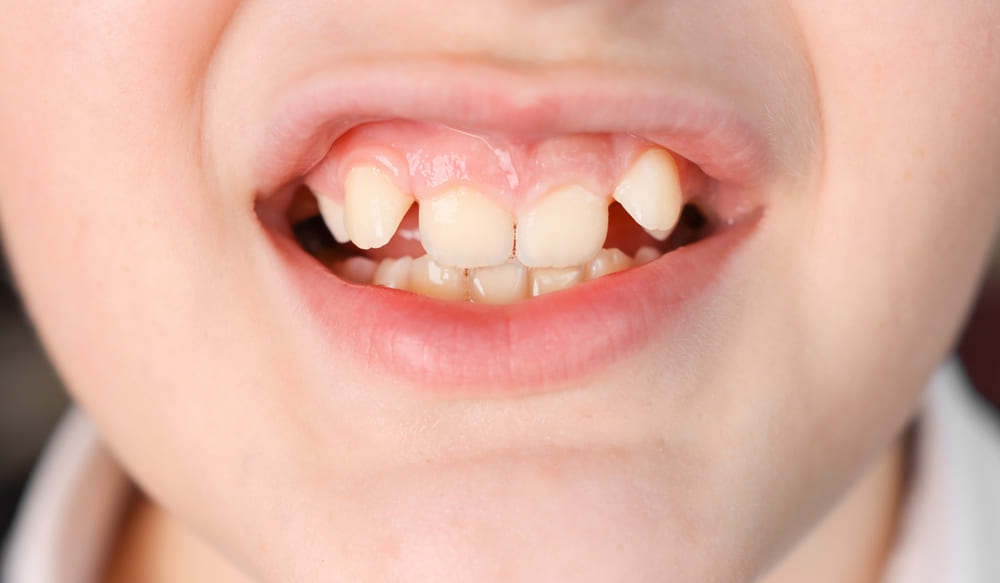
Misaligned or crooked teeth can be worrying for any parent. Yes, some spacing and irregularity are normal during early development, but continuous misalignment should be addressed.
Understanding why this is happening and giving attention early will help to prevent the long-term pain and help to build confidence, too. This blog will help to understand the common causes of misaligned teeth, early signs, and effective permanent solutions.
Early Signs of Misaligned Teeth in Children
Misalignment in teeth is not a permanent problem; giving early care and attention will solve this problem easily. And, these misaligned teeth usually grow during the toddler or early school years.
Below are the common early signs of misaligned teeth in children, which should be addressed:
- Crowded or overlapping baby teeth
- Teeth growing at odd angles
- Gaps that seem excessive or uneven
- Difficulty biting or chewing food
- Mouth breathing or speech issues
Yes, this tooth issue is temporary, but with the proper dental guides can prevent the increase in alignment.
How Genetic Factors Affect Tooth Development
Genetics plays a significant role in a child’s development and growth. Whether it’s hair, bones, or any type of minor problem, if any. And just like that, teeth misalignment is also one of the genetic issues; similarly, underbites, or jaw misalignment, children may inherit similar traits.
A mismatch between jaw size and tooth size is often the most common reason for genetic misalignment. For example:
- A smaller jaw with normal-sized teeth leads to crowding
- A larger jaw with smaller teeth may cause spacing issues
Genetic Influence on Bite Alignment
Jaw growth size and tooth size patterns, whether it’s upper or lower, are in relation to each other, which is given by inheritance. And this pattern of growth may affect the activity like biting, leading to overbites, crossbites, or open bites if not addressed early.
The Role of Thumb-Sucking and Pacifiers in Alignment
Thumb-sucking and pacifiers are always observed as comfortable behaviors in infants. Between the ages of 3-4 years is common, but if it continues beyond this age, then the parents should consult the for details on health development.
Thumb-sucking beyond the age may cause:
- Push the front teeth forward
- Narrow the upper jaw
- Disrupt natural bite alignment
- Increase the risk of open bite formation
And when it puts pressure on teeth while having a tooth problem, then it may cause jaw growth. And consulting with the dentist at an early time, will help to reduce the risk of long-term orthodontic issues.
Solutions for Guiding Teeth Into Proper Position
Below, we discussed some effective solutions that help guide a child’s teeth into proper position:
Early Dental Assessments Matter
Regular dental assessments or check-ups will help parents to identify the problems early, which prevents them from getting it more worsen. A qualified Dentist in Sydney not only helps to monitor jaw growth, but also prevents the tooth eruption patterns with timely intervention if needed.
Interceptive Orthodontics
Early interceptive orthodontic treatments guide the jaw growth and tooth positioning while a child is still growing.
Common early solutions interceptive orthodontic treatments include:
- Space maintainers to prevent crowding
- Expanders to widen narrow jaws
- Habit-correcting appliances for thumb-sucking
- Early braces in select cases, and these braces will not instantly eliminate the alignment, but yes, with time, they reduce the complexity.
Encouraging Healthy Oral Habits
Parents should encourage healthy oral habits by letting their child exercise these:
- Teaching them nasal breathing instead of mouth breathing
- Encouraging correct tongue posture
- Ensuring the timely loss of baby teeth
- Maintaining good oral hygiene to prevent premature tooth loss, and these healthy oral habits will ensure the proper and healthy development.
Final Thoughts on Healthy Teeth Development
Problems never get solved permanently overnight. It requires early intervention, care, and guidance to follow, which prevents the health development or growth over time.
Genetics, habits, and jaw development play a critical role during the growth of a child. And with regular and scheduled visits to qualified dentist clinics, they will improve their child’s long-term dental outcomes.
If you notice early signs of misalignment, seeking professional advice sooner rather than later can make all the difference.
FAQs
At what age should my child be checked for alignment issues?
Most dentists recommend an orthodontic evaluation by age 7, as jaw growth patterns become more visible.
Are crooked baby teeth a serious concern?
Not always, but they can indicate future alignment problems with permanent teeth if left unmonitored.
Can thumb-sucking really cause crooked teeth?
Yes. Prolonged thumb-sucking can push teeth out of position and affect jaw development.
Should my child try braces?
Not necessarily. Early intervention can reduce or simplify the need for braces during adolescence.
Is early orthodontic treatment safe for children?
Yes. When recommended appropriately, early treatments are safe and designed to work with natural growth.
