

Your air conditioner keeps you comfortable during hot summer months. When it starts struggling, your home becomes miserable fast.
If you live in a place like Aberdeen, NC, where the summer heat can be relentless, ensuring your AC is in top condition is crucial. Regular maintenance can prevent unexpected breakdowns and keep your home comfortable. However, if you notice unusual noises or a sudden spike in your energy bills, it might be time to consult a professional. They can diagnose issues that aren’t immediately apparent and offer solutions tailored to your system’s needs. Remember, addressing minor problems early can save you from costly repairs down the line, ensuring your AC runs efficiently throughout the season.
Knowing these common problems helps you know when simple fixes work and when you need professional help.
Dirty Air Filters Block Airflow
The most common AC problem has the easiest fix. Dirty air filters restrict airflow through your system. Your AC works harder trying to push air through clogged filters.
How Filters Affect Performance
Air filters trap dust, pollen, and debris before they reach your AC components. As filters collect particles, airflow decreases. Less airflow means less cooling power reaching your rooms.
Most homes need filter changes every one to three months. Homes with pets, smokers, or allergies need more frequent changes. Check your filter monthly and replace it when it looks dirty.
Restricted airflow causes your AC to run longer cycles. The system struggles to reach your thermostat setting. You pay higher electric bills while getting less cooling.
Signs Your Filter Needs Changing
Weak airflow from vents indicates filter problems. If you hold your hand near vents and barely feel air movement, check the filter first.
Dust accumulation around vents means your filter stopped doing its job. Particles passing through dirty filters settle on walls and furniture near vents.
Your AC running constantly without cooling properly often traces back to airflow restrictions. A new filter sometimes solves this problem immediately.
Electrical Problems Stop Your AC
AC units use significant electricity. Electrical issues prevent operation and sometimes damage components.
Common Electrical Issues
Tripped breakers shut off power to your AC. Check your electrical panel before calling for service. Reset tripped breakers and see if your AC starts working.
Capacitors store electrical charge helping motors start. Failed capacitors prevent your AC from turning on or cause it to shut off randomly. Humming sounds without the fan running indicate capacitor problems.
Worn contactors prevent electricity from reaching components. These switches wear out over time from constant use. Your AC might not start even though the thermostat calls for cooling.
Why Electrical Work Needs Pros
AC electrical systems use 240 volts, which can kill you. DIY electrical work on AC units is extremely dangerous. Licensed technicians have training and tools working safely with high voltage.
Misdiagnosed electrical problems lead to replacing wrong parts. Professionals test systems methodically finding actual problems. This approach saves money compared to guessing at solutions.
Homeowners seeking reliable help often search for ac repair sevices denver co professionals or similar qualified contractors in their regions. These licensed technicians understand both the technical aspects of modern cooling systems and local building codes governing electrical work and equipment installations.
Refrigerant Leaks Reduce Cooling Power
Refrigerant is the chemical that actually cools your air. Your AC moves this substance between indoor and outdoor units. Leaks reduce the amount available for cooling.
Understanding Refrigerant Problems
AC systems use specific refrigerant amounts for proper operation. Too little refrigerant means your system can’t absorb enough heat from indoor air. Your home stays warm even though the AC runs constantly.
Refrigerant doesn’t get used up like gasoline. If your system is low, there’s a leak somewhere. Simply adding more refrigerant without fixing leaks wastes money because it leaks out again.
Ice forming on your indoor unit often indicates refrigerant problems. Low refrigerant causes the evaporator coil to freeze. This ice blocks airflow and reduces cooling even further.
Why You Need Professional Help
Refrigerant requires EPA certification to handle legally. DIY refrigerant work is illegal and dangerous. The chemicals harm the environment and cause health problems with improper handling. That’s why hiring experts who offer affordable ac repair services ensures the work is completed safely and in compliance with regulations.
In addition to safety concerns, detecting refrigerant leaks requires specialized equipment. Professionals use electronic detectors and pressure tests to locate even the smallest leaks that are invisible to the naked eye. They fix leaks before adding refrigerant.
Moreover, different AC systems use different refrigerants. Using the wrong type damages your system permanently. Professionals know which refrigerant your specific model needs.
Finding leaks requires special equipment. Professionals use electronic detectors and pressure tests locating tiny leaks you can’t see. They fix leaks before adding refrigerant.
Different AC systems use different refrigerants. Using the wrong type damages your system permanently. Professionals know which refrigerant your specific model needs.
Thermostat Issues Cause Temperature Problems
Your thermostat controls when your AC runs. Problems with this small device create cooling issues throughout your home.
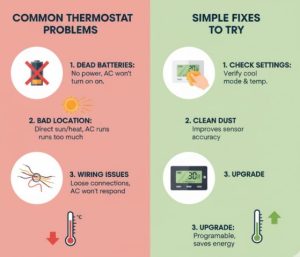 Common Thermostat Problems
Dead batteries in programmable thermostats stop them from working. Your AC won’t turn on if the thermostat has no power. Replace batteries once yearly to prevent this problem.
Incorrect thermostat locations cause poor temperature readings. Thermostats in direct sunlight or near heat sources read higher temperatures than your actual home temperature. The AC runs too much trying to reach impossible settings.
Wiring problems prevent thermostats from communicating with AC units. Loose wires or corroded connections interrupt signals. Your AC might not respond to thermostat commands.
Simple Fixes to Try
Check your thermostat settings before calling for help. Someone might have switched it to heat mode or turned it off completely. Verify it’s set to cool and the temperature is lower than current room temperature.
Clean dust from thermostat components. Dust buildup interferes with temperature sensors. Gently wipe the inside with a soft cloth after removing the cover.
Replace old thermostats with programmable models. Modern thermostats provide better temperature control and let you create schedules saving energy. Installation is simple for most models.
Dirty Coils Reduce Efficiency
Your AC has two sets of coils. Indoor evaporator coils absorb heat from your air. Outdoor condenser coils release that heat outside. Dirty coils can’t transfer heat effectively.
How Dirt Affects Coils
Dust and debris coat evaporator coils over time. This coating insulates the coils, preventing them from absorbing heat properly. Your AC runs longer without cooling effectively.
Outdoor condenser coils collect leaves, grass clippings, and dirt. This buildup blocks airflow through the unit. Your AC can’t release heat efficiently when coils are covered.
Dirty coils force your compressor to work harder. This extra work increases energy use and shortens compressor life. The compressor is the most expensive component to replace.
If your AC unit is still underperforming despite regular maintenance, it might be time to consider the expertise of a professional. Sometimes, the issue lies beyond simple fixes and requires a trained eye to diagnose and resolve. For those in the region, reaching out to Appalachian Refrigeration Heating & Cooling can provide the necessary insight and service to get your system back on track. Their team is equipped to handle complex problems that might be affecting your unit’s efficiency. By addressing these issues promptly, you can ensure a comfortable indoor environment and potentially extend the lifespan of your AC system.
Maintenance You Need
Annual professional cleaning keeps coils working properly. Technicians use special cleaners and tools removing buildup without damaging delicate fins. This service costs $100 to $200 but prevents expensive repairs.
Keep outdoor units clear of debris yourself. Remove leaves and grass within two feet of the unit. Trim bushes and plants allowing proper airflow around all sides.
Ductwork Problems Waste Cooling
Ducts carry cooled air throughout your home. Leaks and disconnections waste your cooling efforts.
Signs of Duct Issues
Rooms that never get cool might have duct problems. Disconnected or crushed ducts prevent air from reaching certain areas. You pay to cool air that never makes it to living spaces.
High energy bills without increased cooling suggest duct leaks. Air escaping into attics or crawl spaces wastes money. Sealing ducts improves efficiency by 20 to 30 percent.
Dust buildup in some rooms indicates duct leaks pulling in attic dust. This dust circulates through your home causing allergies and making surfaces dirty faster.
Professional Duct Services
Duct sealing requires access to spaces most homeowners can’t reach safely. Professionals crawl through attics and under houses sealing connections and holes. This work improves comfort and lowers bills.
Duct cleaning removes years of accumulated dust and debris. While not needed annually, cleaning every five to seven years improves air quality. Choose certified companies following proper cleaning standards.
Compressor Failure Means Big Problems
The compressor pumps refrigerant through your system. When compressors fail, replacement often costs more than buying a new AC unit.
Signs of Compressor Problems
Hard starting where your AC tries repeatedly to turn on indicates compressor struggles. You hear clicking sounds as the system attempts to start but fails.
Hot air blowing from vents when AC runs means the compressor isn’t pumping refrigerant. Your system moves air but can’t cool it.
Circuit breakers tripping immediately when AC starts suggest compressor electrical problems. The failing compressor draws too much power, triggering breaker protection.
Repair or Replace Decisions
Compressor replacement costs $1,500 to $3,000. If your AC is over 10 years old, replacing the entire system makes more financial sense. New units offer better efficiency saving money long-term.
Warranties sometimes cover compressor replacement. Check your warranty documents before deciding. Parts coverage reduces replacement costs significantly.
When to Call Professionals
Some AC problems need immediate professional attention. Waiting makes problems worse and repairs more expensive.
Call immediately if you smell burning odors. This indicates electrical problems or overheating components. Continuing to run your AC risks fire hazards.
Strange loud noises like grinding, squealing, or banging mean mechanical problems. Components might be loose or failing. Running your AC with these sounds causes additional damage.
Complete system failure during extreme heat creates health risks. Elderly people and young children face dangerous temperature exposure. Emergency service protects your family.
Water leaking around your indoor unit indicates drainage problems. Continued leaking damages floors and promotes mold growth. Quick repairs prevent expensive water damage.
Your AC works hard keeping you comfortable. Regular maintenance and quick attention to problems keep systems running efficiently. Know which problems you fix yourself and when professional help becomes necessary. This knowledge saves money while protecting your cooling investment.
