


Water damage happens fast. A pipe bursts, a toilet overflows, or heavy rain floods your basement. Within minutes, water spreads across floors, soaks into carpets, and damages your belongings.
In the immediate aftermath of water damage, it’s crucial to act swiftly to mitigate further issues. Begin by assessing the extent of the damage and identifying the source of the water. Once the source is controlled, prioritize removing excess water and drying out the affected areas to prevent mold growth. It’s also important to document the damage for insurance purposes. For more detailed guidance on handling water damage effectively, see more info on professional restoration techniques and tips. Taking these steps can significantly reduce the long-term impact and help restore your home to its original condition.
The first 24 hours after water damage are the most important. What you do during this time determines how much you save and how bad the damage becomes. Water keeps causing problems every hour you wait. Mold starts growing within 24 to 48 hours. Wood begins warping. Drywall falls apart.
Quick action saves your home and your wallet.
Let me walk you through exactly what to do, step by step, during those critical first hours.
Hour 1: Make Sure Everyone Is Safe
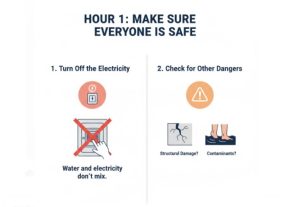 Safety comes before saving your stuff. Water damage creates dangers you might not see right away.
Turn Off the Electricity
Water and electricity don’t mix. If water is near outlets, appliances, or your electrical panel, turn off the power at your main breaker box. Don’t walk through water to reach the breaker box. If you need to walk through water to turn off power, call an electrician instead.
If you’re not sure where your breaker box is or how to turn it off safely, leave this job to professionals. Your life matters more than your furniture.
In the aftermath of water damage, it’s crucial to act swiftly to mitigate further issues. Begin by assessing the extent of the damage and documenting everything for insurance purposes. Next, prioritize safety by turning off electricity in affected areas. As you move forward, consider the importance of professional assistance. Experts can provide valuable insights and tools to ensure thorough drying and mold prevention. For more detailed guidance on managing water damage and maintaining a safe environment, explore resources available on this website. They offer comprehensive advice tailored to various scenarios, helping you navigate the complexities of restoration with confidence.
Stop the Water Source
Find where the water is coming from and stop it if you safely do this yourself. Turn off the main water valve if a pipe burst. Turn off the water supply to a toilet or washing machine if that’s where the leak started.
For problems you don’t understand or problems with sewage, call a plumber right away. Don’t try to fix serious plumbing problems yourself.
Watch for Dangers
Look for sagging ceilings that might fall. Stay away from rooms with heavy water damage until you know they’re safe. If water came from sewage or flooding, it contains bacteria and other dangerous things. Don’t touch this water with bare hands.
Hours 2-3: Document Everything
Before you move or throw away anything, take pictures and videos. You need this proof for your insurance company.
Take Lots of Photos and Videos
Use your phone to photograph and record video of all water damage. Show the water on floors, damaged walls, ruined furniture, and wet belongings. Take wide shots showing whole rooms and close-up shots of specific damage.
Date and time stamps on photos help prove when damage happened. Most phones do this automatically.
Make a List of Damaged Items
Write down everything the water damaged. Include furniture, electronics, clothes, carpet, and anything else you see. This list helps when you file your insurance claim.
If you have receipts or pictures of items before they got damaged, gather those too. They prove what you owned and what things cost.
Call Your Insurance Company
Contact your insurance company as soon as possible. Many insurance policies require you to report damage within 24 hours. The company will tell you what steps to take next and send someone to look at the damage.
Ask your insurance company if they recommend specific water damage restoration companies. Some insurance companies work with certain companies and handle the payment directly.
Hours 4-8: Remove Standing Water
The faster you remove water, the less damage it causes. But how you remove water depends on how much you have.
For Small Amounts of Water
If you have just an inch or two of water in a small area, use towels, mops, and a wet-dry vacuum. Soak up as much water as possible. Wring out towels into buckets and dump the water outside or down a drain.
A regular vacuum cleaner doesn’t work for this. You need a wet-dry shop vacuum made for sucking up water. You rent these at hardware stores if you don’t own one.
For Larger Amounts of Water
Several inches of water covering large areas needs professional equipment. Companies use powerful pumps and extractors that remove water much faster than you do yourself.
Standing water damages your home more every hour it sits there. Professional water removal usually costs $500 to $2,000 depending on how much water you have. This money is worth spending because it prevents thousands more in damage.
Hours 8-16: Start Drying Everything
After removing standing water, everything is still wet. Carpets, padding, drywall, and wood all hold moisture. This moisture causes mold, warping, and rot if you don’t dry things quickly.
Move Furniture and Belongings
Move furniture off wet carpet onto dry areas or outside. Take cushions off couches and chairs so air reaches all sides. Remove items from wet floors and put them somewhere dry.
Separate items you want to save from things too damaged to keep. This makes cleanup easier later.
Increase Air Flow
Open all windows and doors if outside weather allows. Turn on ceiling fans and put box fans around wet areas. Point fans at wet walls and floors. Moving air dries things much faster than still air.
If you have a dehumidifier, run it in the damaged area. Dehumidifiers pull moisture from the air, which helps everything dry faster.
Remove Wet Carpet and Padding
Carpet padding soaks up water like a sponge and rarely dries properly. Pull back carpet and remove the padding underneath. Sometimes you save the carpet itself if you dry it quickly, but padding almost always needs replacing.
Cut padding into pieces for easier removal. Roll wet carpet back and prop it up so air reaches both sides.
Hours 16-24: Call Professional Help
Even if you removed water and started drying, you probably need professional restoration help. These companies have equipment and knowledge you don’t have at home. This is often when emergency water damage restoration services become critical, as they can respond quickly to prevent secondary issues like mold growth and structural weakening.
What Restoration Companies Do
Professional restoration companies bring industrial fans, commercial dehumidifiers, and moisture meters. They measure how much moisture is in your walls, floors, and air. They know exactly how long everything needs to dry.
These companies also check for hidden water damage. Water travels through walls and under floors where you don’t see it. Special tools find this hidden moisture before it causes bigger problems.
Restoration professionals understand mold prevention. They know which materials need removing and which items you save. They work with insurance companies all the time and help with your claim.
In areas with quick weather changes like Colorado, where a sunny day turns into a thunderstorm in minutes, water damage happens often. Finding the best restoration company in Loveland Colorado or wherever you live means choosing a company that responds fast, communicates clearly, and has proper equipment and training.
What to Ask Restoration Companies
When you call restoration companies, ask these questions:
- How quickly do you respond to emergencies?
- What equipment do you bring?
- Do you work directly with insurance companies?
- What does your service cost?
- How long will drying take?
Good companies answer your questions clearly and arrive within hours, not days. They give you written estimates and explain what they’ll do.
Things You Should Not Do
Some actions seem helpful but actually make water damage worse.
Don’t Wait to Start
Every hour matters. Don’t wait until tomorrow or until insurance approves work. Start removing water and drying things immediately. You file insurance claims later, but you need to prevent damage now.
Don’t Use Regular Vacuums
Regular vacuum cleaners aren’t made for water. Water ruins the motor and creates electrical dangers. Only use wet-dry vacuums designed for water.
Don’t Ignore Hidden Water
Just because you don’t see water anymore doesn’t mean it’s gone. Water hides in walls, under floors, and in crawl spaces. This hidden moisture causes problems later if you don’t address it now.
Don’t Try Saving Everything
Some things are too damaged to save. Trying to keep ruined items wastes time and money. Throw away things that soaked in dirty water, items with mold growing, and things that smell bad even after cleaning.
Moving Forward
The first 24 hours after water damage are stressful and overwhelming. But taking quick action during this time saves your home and reduces repair costs.
Remember these key points:
- Put safety first always
- Document all damage before cleaning
- Remove water as fast as possible
- Start drying everything immediately
- Call professionals for help
Water damage doesn’t fix itself. Every hour you wait makes the problem bigger and more expensive. But when you act quickly and follow these steps, you protect your home and give yourself the best chance of saving your belongings.
Take a deep breath, start with safety, and work through each step. You’ve got this, and help is available when you need it.
